
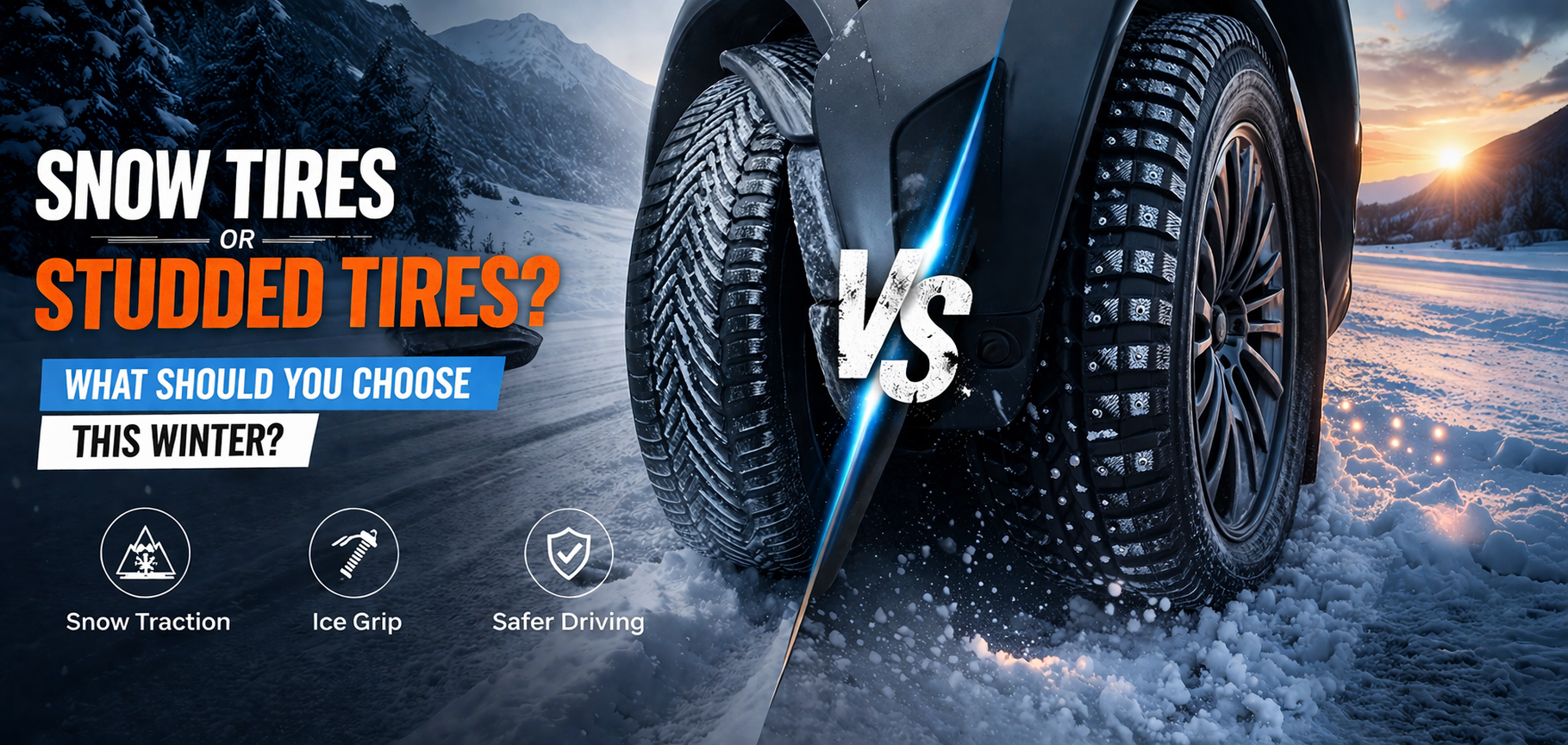
Snow Tires or Studded Tires: What Should You Choose This Winter?
Winter driving conditions vary widely. In some regions, roads are cleared quickly, while in others, ice can remain for weeks. Because of this, many drivers wonder whether snow tires are enough or if studded tires are worth the extra effort.
The truth is simple:
snow tires handle most winter conditions well, but studded tires are designed specifically for ice.
Choosing the right option depends on your vehicle, terrain, and how often you encounter icy roads.
What’s the Difference Between Snow Tires and Studded Tires?
Snow tires (also called winter tires) use softer rubber and deeper tread patterns to maintain grip in cold temperatures. They perform well on snow, slush, and everyday winter roads.
Studded tires, on the other hand, include small metal studs that bite into ice. These studs improve braking and control when roads are frozen or slippery.
According to the National Highway Traffic Safety Administration, loss of traction is one of the leading causes of winter accidents. Improving grip is therefore one of the most effective ways to increase safety.
Does Vehicle Type Matter? 2WD vs 4WD
Many drivers believe that four-wheel drive eliminates the need for studded tires. In reality, drivetrain and traction are different things.
4WD helps you move.
Tires help you stop.
Two-wheel-drive vehicles usually benefit more from studded tires because they rely on fewer driven wheels. However, even four-wheel-drive vehicles can struggle on ice, especially when braking or driving downhill.
You may benefit from studded tires if:
- Your vehicle struggles to start on icy roads
- You frequently drive on hills
- You tow trailers in winter
- You live in rural or mountainous areas
Terrain Matters More Than Vehicle Type
In real-world driving, terrain often matters more than the type of vehicle.
Studded tires make the biggest difference in situations such as:
Steep hills
Climbing or descending icy slopes requires strong traction and control.
Frozen driveways or rural roads
Untreated surfaces can remain icy for long periods.
Ice hidden under snow
One of the most dangerous winter conditions.
In flat urban areas with well-maintained roads, snow tires are usually sufficient.
Common Vehicles That Use Tire Studs
Tire studs are used across many types of vehicles—not just passenger cars. They are especially common wherever traction directly affects safety or productivity.
Typical applications include:
- Motorcycles and dirt bikes — winter riding and frozen trails
- ATV and UTV vehicles — snow-covered terrain and outdoor work
- Pickup trucks and commercial vehicles — rural driving and heavy loads
- Forklifts and industrial equipment — slippery work sites
- Rally and motorsport vehicles — high-speed driving on ice
In these environments, studded tires are often used not for comfort, but for reliability.
Are Studded Tires Legal Everywhere?
Before installing studded tires, it is important to check local regulations. Laws vary widely depending on climate and road infrastructure.
Some regions:
- Allow studded tires only during winter months
- Restrict their use in urban areas
- Prohibit them entirely in warmer climates
Guidelines from Transport Canada show that seasonal restrictions are common even in cold regions.
When in doubt, always verify local rules before installing studded tires.
When Should You Choose Snow Tires?
Snow tires are usually the right choice if:
- You drive mainly in cities
- Roads are regularly plowed
- Winter conditions are moderate
- Comfort and noise reduction matter
For most drivers, snow tires provide the best balance of safety and convenience.
When Should You Choose Studded Tires?
Studded tires are worth considering if:
- You frequently drive on icy roads
- You live in rural or mountainous areas
- You regularly drive on steep hills
- Traction is critical for work or safety
They are especially useful in regions with long, cold winters where ice remains on roads for extended periods.
Final Recommendation
Most drivers will do well with snow tires alone. However, studded tires can provide a meaningful safety advantage in the right conditions.
A simple rule to remember:
Snow tires are the standard solution.
Studded tires are the specialized solution for ice.
The best choice depends not on the vehicle you drive, but on the conditions you drive in.