
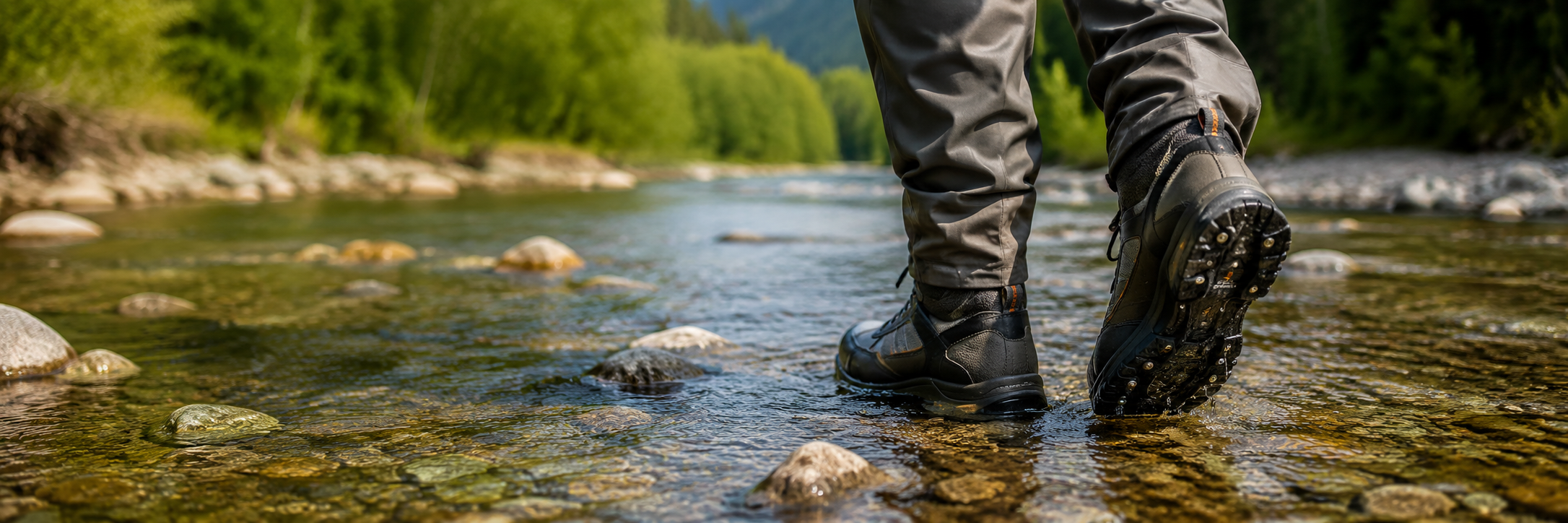
Slippery rocks can turn a good fishing day into a frustrating one fast.
Even with a good pair of wading boots, wet stones, mossy riverbeds, and strong current can make every step feel uncertain. That is why many anglers add wading boot studs for better grip and stability.
But not every stud fits every boot.
The right choice depends mainly on two things:
- your boot sole type
- the river conditions you usually fish in
For most anglers, the choice comes down to three common models: 110, 300B, and 300A.
Quick Answer
If you want the fastest answer:
- Choose 110 for felt soles or thin rubber soles
- Choose 300B for most standard rubber sole wading boots
- Choose 300A for deep tread rubber soles, mossy rocks, and strong current
Not sure which one to choose?
Start with 300B.
It is the best all-around choice for most rubber sole wading boots.
Wading Boot Stud Comparison
| Model | Suitable Boot Type | Typical Environment | Use Scenario | Grip Level | Compatible Wading Boot Models |
|---|---|---|---|---|---|
| 110 | Felt sole / thin rubber | Light wet rocks, shallow streams | Casual fishing, easy walking | Medium | Simms Felt, Orvis Felt, Korkers Felt |
| 300B | Standard rubber sole | Mixed rocks, gravel, normal rivers | Regular wading, daily fishing | High | Simms G3, Orvis Clearwater, Patagonia Forra |
| 300A | Deep tread rubber sole | Mossy rocks, strong current, slick riverbeds | Heavy use, guides, rough water | Maximum | Simms G3 Vibram, Orvis Pro, Patagonia Foot Tractor |
This table is a guide. Always check your boot sole thickness and tread depth before installation.
Choose by Boot Sole Type
Felt Sole Boots: Choose #110
The 110 stud is a good choice for felt sole boots and thinner soles.
It adds extra grip without feeling too aggressive underfoot. This makes it suitable for light wading, casual fishing, and walking on wet rocks or shallow riverbeds.
Choose #110 if you want:
- added traction on felt soles
- better walking comfort
- a less aggressive stud
- a good option for light use
Standard Rubber Sole Boots: Choose 300B
The 300B stud is the best all-around option for most anglers.
It works well with standard rubber sole wading boots and gives a strong balance of grip, comfort, and versatility.
Choose 300B if you fish in:
- mixed river conditions
- wet rocks and gravel
- normal current
- everyday fishing environments
For most rubber sole boots, 300B is the safest starting point.
Deep Tread Rubber Boots: Choose 300A
The 300A stud is built for stronger bite.
It is better for deep tread rubber soles because the stud tip can reach past the boot lugs and make better contact with slippery surfaces.
Choose 300A if you often fish on:
- moss-covered rocks
- fast current
- slick riverbeds
- rough or uneven terrain
This is the model to choose when maximum traction matters.
Are Tungsten Carbide Wading Boot Studs Worth It?
Yes, especially if you fish often.
Cheaper steel studs may wear down faster on hard rocks. Tungsten carbide tips are harder and more wear-resistant, which helps them keep their grip longer on rocks, gravel, and riverbeds.
For anglers, that means better long-term value and more reliable traction when the river gets slippery.
If you want studs that can handle real outdoor use, choose screw-in studs with:
- tungsten carbide tips
- strong steel bodies
- secure thread design
- enough prominence above the sole
How Many Studs Do You Need Per Boot?
Most wading boots use about 8 to 14 studs per boot.
A simple starting point:
| Use Level | Studs Per Boot |
|---|---|
| Light use | 8 to 10 |
| Regular fishing | 10 to 14 |
| Heavy use | 14+ |
For general fishing, start with fewer studs and add more if you need extra grip.
Place studs around the heel, forefoot, and outer edges of the sole, where your boot makes the most contact with the riverbed.
Quick Installation Tips
Before installing wading boot studs, check:
- Sole thickness
Make sure the sole is thick enough to hold the stud securely. - Tread depth
The stud tip should reach beyond the rubber lugs for better grip. - Stud placement
Space the studs evenly across the sole for balanced traction.
Do not overtighten. If the stud sits too deep, it may lose traction.
Which Wading Boot Stud Should You Choose?
Here is the simple version:
- 110: best for felt soles and light use
- 300B: best all-around choice for most rubber sole boots
- 300A: best for deep tread soles, mossy rocks, and strong current
Still not sure?
Choose 3000B. It fits the widest range of rubber sole wading boots and works well in most river conditions.
Shop Wading Boot Studs
Upgrade your wading boots with screw-in tungsten carbide studs designed for wet rocks, riverbeds, and mixed outdoor terrain.
Choose the right model for your boots:
- 110 for felt soles and light use
- 300B for most rubber sole boots
- 300A for maximum grip and deeper tread boots
Shop Wading Boot Studs
FAQ
What are the best wading boot studs?
The best wading boot studs depend on your boot sole and fishing conditions. Choose 110 for felt soles, 300B for most rubber sole boots, and 300A for deep tread boots or very slippery riverbeds.
Can you put studs in rubber wading boots?
Yes. Screw-in wading boot studs can be installed in many rubber sole wading boots, as long as the sole has enough thickness to hold the stud securely.
Can you use screw-in studs on felt soles?
Yes. Shorter studs such as 110 are commonly used on felt sole boots because they add grip without being too aggressive underfoot.
Are carbide studs better than steel studs?
Carbide-tipped studs are usually more wear-resistant than standard steel studs. They are a better choice for anglers who fish often or walk on hard, slippery riverbeds.
How many studs do I need per wading boot?
Most anglers use about 8 to 14 studs per boot. For regular fishing, 10 to 14 studs per boot is a good starting point.
Which wading boot stud should I choose if I am not sure?
Choose 300B. It is the most versatile option for standard rubber sole wading boots and mixed river conditions.